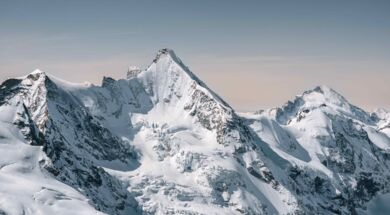


The Monte Rosa Ski Traverse is an exceptional high-altitude ski tour through one of the largest glacial environments in the Alps. Over four days, you will travel between Italy and Switzerland through spectacular scenery dominated by the Matterhorn, Lyskamm and the major peaks of the Valais Alps.
Starting from Staffal, in the Gressoney Valley, this adventure combines ski touring, glacier travel, crampon-assisted ascents and long high-altitude descents. Depending on the conditions, the itinerary may include several iconic peaks over 4,000 metres, such as the Breithorn, Pollux, Castor, Zumsteinspitze and Signalkuppe, also known as Punta Gnifetti.
Nights in mountain huts and early-morning starts provide complete immersion in this high-mountain environment. The guide will adapt the itinerary according to the weather, snow conditions, glacier conditions and the group’s ability.
Highlights
- A 4-day, 3-night ski tour in the Monte Rosa massif.
- A glacier traverse between Italy and Switzerland.
- The possibility of climbing several peaks over 4,000 metres.
- Long ski descents across glaciers.
- Outstanding views of the Matterhorn and the Valais Alps.
- Three nights in high-altitude mountain huts.
- A maximum of 4 participants per guide.
- Supervision by an IFMGA mountain guide.
- An itinerary adapted daily to the conditions.
Ski Tour Itinerary
This four-day ski tour offers an exceptional high-altitude traverse between Switzerland and Italy, through the Monte Rosa and Matterhorn massifs. Peaks over 4,000 metres, vast glaciers, long descents and nights in mountain huts shape this challenging itinerary.
The guide may modify the programme according to the weather, snow conditions, glacier conditions, lift operations and the group’s ability.
Day 1 | Zermatt – Klein Matterhorn – Breithorn – Ferraro Hut
Departure from Zermatt at around 8:00 a.m., followed by a cable-car ride to Klein Matterhorn, at 3,817 metres.
If the weather, snow conditions and the group’s acclimatisation allow, you may climb the Breithorn, at 4,164 metres. This objective remains optional.
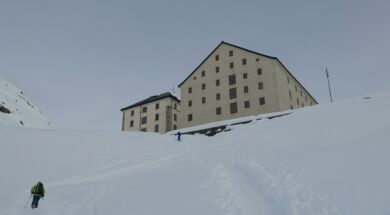
The day continues with a long glacier descent towards Val d’Ayas, beneath the summits of Pollux and Castor. After leaving the Verra Glacier, a traverse leads to the Walser hamlet of Résy and the Ferraro Hut, located at 2,066 metres.
This spectacular first stage combines high-altitude terrain with a very long descent towards the Italian side of the massif.
Ascent: 100 to 500 metres
Descent: 1,800 to 2,200 metres
Estimated duration: 5 to 7 hours
Overnight: Ferraro Hut, 2,066 metres
Day 2 | Résy – Bettaforca Pass – Stafal – Mantova Hut
From the Ferraro Hut, you will climb towards the Bettaforca Pass, at 2,672 metres, followed by the Bettolina area, at approximately 2,905 metres. Depending on the conditions and the organisation chosen by the guide, part of the ascent may be completed on skis or using the ski lifts.
You will then descend to Stafal, in the Gressoney Valley. The group will take the lifts to Indren, at approximately 3,280 metres.
The final part of the stage is completed on skis across glacial terrain to reach the Città di Mantova Hut, at 3,455 metres.
This day combines ascents, descents and ski lifts before an overnight stay in the heart of the Monte Rosa massif.
Ascent and descent: variable depending on the use of ski lifts
Estimated duration: 6 to 7 hours
Overnight: Città di Mantova Hut, 3,455 metres
Day 3 | Mantova Hut – Lys Pass – Zumsteinspitze or Signalkuppe – Zermatt
Early departure from the hut to ascend the glacier towards the Lys Pass, at 4,255 metres, on the border between Switzerland and Italy.
Depending on the conditions, the group’s ability and acclimatisation, the objective may be Zumsteinspitze, at 4,563 metres, or Signalkuppe, also known as Punta Gnifetti, at 4,554 metres. These ascents remain optional and may be replaced by a more suitable itinerary.
From the high plateaux of Monte Rosa, you will begin one of the great glacier descents of the Alps. The route joins the Grenzgletscher, passes close to the Monte Rosa Hut, at 2,883 metres, and continues down the Gorner Glacier to Zermatt.
Upon arrival, the group will use the ski lifts from the Furi area to reach Testa Grigia and the Guide del Cervino Hut, at approximately 3,480 metres.
Ascent: 700 to 1,000 metres
Descent: 2,700 to 3,000 metres
Estimated duration: 7 to 9 hours
Overnight: Guide del Cervino Hut, approximately 3,480 metres
Day 4 | Testa Grigia – Roccia Nera – Schwarztor – Zermatt
Departure from the Guide del Cervino Hut, in the Testa Grigia area. An ascending traverse across the glacial plateau leads towards Roccia Nera and then to the Schwarztor, a glacial pass located between Pollux and Roccia Nera.
After crossing the pass, you will begin a magnificent and lengthy descent over the Schwarzgletscher. The route gradually reaches the lower sections of the Gorner Glacier before continuing towards Zermatt, at approximately 1,600 metres.
This final stage concludes the tour with a major glacier descent beneath the iconic peaks of the Valais Alps.
Ascent: approximately 600 metres
Descent: 2,000 to 2,700 metres, depending on the itinerary and glacier conditions
Estimated duration: 5 to 7 hours
End of the tour: arrival in Zermatt in the afternoon
Practical Information
Trip Details
Activity: ski touring and ski mountaineering
Duration: 4 days and 3 nights
Level: advanced
Meeting point: Staffal, Gressoney Valley
Mountain range: Monte Rosa
Countries: Italy and Switzerland
Accommodation: high-altitude mountain huts
Meals: half board
Supervision: IFMGA mountain guide
Standard group size: 4 participants per guide
Recommended period: March and April
Required Fitness and Technical Level
This traverse is intended for advanced ski tourers who already have experience in high-altitude mountain environments. It is not suitable as an introduction to ski touring.
You must be able to:
- ski confidently in all types of snow and on ungroomed terrain;
- ski down slopes that may occasionally reach 35 to 40 degrees;
- complete between 1,000 and 1,300 metres of ascent per day;
- maintain an uphill pace of at least 300 vertical metres per hour;
- climb continuously for 3 to 4 hours;
- carry a backpack weighing 8 to 10 kg;
- use ski crampons and mountaineering crampons;
- carry your skis on your backpack when required;
- travel roped together on a glacier;
- understand the basics of crevasse rescue.
Regular physical training is strongly recommended. A preliminary outing with a guide may be offered to assess your technical ability, endurance and familiarity with the required equipment.
Monte Rosa Ski Traverse FAQ
Who is this ski tour suitable for?
This traverse is intended for advanced ski tourers who can ski confidently in all types of snow. Previous experience of multi-day ski tours and glacier terrain is strongly recommended.
Which summits will we climb?
The Breithorn, Vincent Pyramid and Punta Gnifetti are among the possible objectives. The guide will select the summits according to the weather, snow conditions, glacier conditions and the group’s ability.
Is the ascent of Lyskamm included in the programme?
No. The ascent of Lyskamm should not be considered part of the planned programme. The tour takes place in the surroundings of Lyskamm, but climbing the mountain involves specific technical difficulties and a high level of commitment. Its inclusion in the description refers primarily to the massif and the views encountered along the route.
Is the itinerary final?
No. The itinerary is provided for guidance only, as high-mountain conditions can change rapidly. The guide may modify a summit, a stage, a mountain hut or the entire route to ensure the group’s safety and maintain the quality of the trip.
How much ascent should I expect?
Some days may include between 1,000 and 1,300 metres of ascent. The distance, ascent and overall duration will depend on the itinerary ultimately chosen by the guide.
Do I need to know how to use crampons?
Yes. Some sections may require you to travel on foot wearing crampons, with your skis attached to your backpack. You must therefore be familiar with basic ski-mountaineering techniques.
Do I need to know crevasse-rescue techniques?
Yes. Participants must have recent knowledge of glacier travel and crevasse-rescue techniques. If necessary, training or a refresher session must be completed before the tour.
Where do we stay during the traverse?
The three nights are spent in high-altitude mountain huts on a half-board basis. Accommodation may be basic, with shared rooms or dormitories depending on the hut.
Are the mountain huts definitively confirmed?
The mountain huts may change depending on the itinerary, opening dates, availability and conditions in the massif. The final accommodation arrangements will be specified in the pre-departure information.
Is safety equipment provided?
Group equipment, including ropes, is provided. An avalanche transceiver, shovel and probe may be available to borrow, subject to availability. Participants are normally responsible for bringing the rest of their personal equipment.
Can I register on my own?
Yes, individual registration is possible. However, the advertised price is based on a group of four participants. If the minimum group size is not reached, an alternative arrangement may be offered in accordance with the booking conditions.
What is the best time of year?
The generally recommended period is from March to April. This may vary depending on snow cover, the opening of mountain huts and ski lifts, and glacier conditions.
What insurance do I need?
Insurance covering search and rescue, mountain rescue services and repatriation in both Italy and Switzerland is mandatory. Insurance covering cancellation, curtailment and baggage is also strongly recommended.
What happens in the event of bad weather?
The guide may change the schedule, choose a different summit, alter a stage or offer an alternative itinerary. Any resulting financial consequences and cancellation terms are governed by the general terms and conditions of sale.
How do I book?
Bookings are made using the trip registration form. When submitting your request, please provide details of your recent experience, the amount of ascent you normally complete, your downhill skiing ability and your knowledge of ski-mountaineering techniques.