

Learn How to Plan Your Ski Tours and Make Decisions in the Mountains
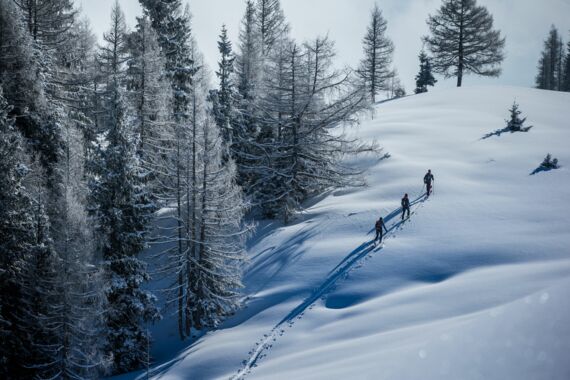
Breaking trail far from the ski lifts offers an incredible sense of freedom. However, becoming independent in the winter mountains requires more than skiing ability. You also need to know how to plan a route, read the terrain, understand the conditions and adapt your decisions accordingly.
During this three-day ski touring and mountain safety course, a certified mountain guide will teach you a practical method for assessing risk and making informed decisions before and during your outings.
Theory sessions, practical exercises and real ski tours combine to help you become more independent in the Aravis and Bornes mountain ranges.
Course Highlights
- Three days of indoor and field-based training, supported by educational resources
- Instruction from a certified mountain guide
- Small groups of 4 to 6 participants
- Understanding and using the avalanche danger bulletin
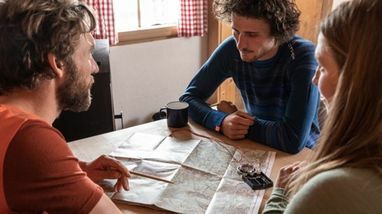
- Planning routes with maps and smartphone applications
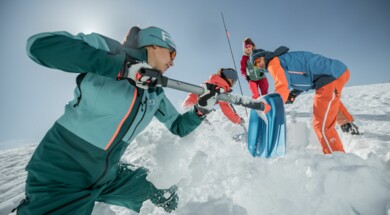
- Observing snow and terrain
- Structured decision-making methods
- Practical exercises on real ski touring routes
- Managing the group, knowing when to turn back and identifying alternative options
- Loan of avalanche safety equipment, subject to the conditions of the selected course
The objective: to move beyond simply following an existing track and learn why a route may be considered, adapted or abandoned.
Button:
View Upcoming Dates
Who Is This Course For?
This course is designed for people who already practise ski touring and would like to structure their knowledge in order to become more independent.
This Course Is Right for You If:
- You have already completed several ski tours.
- You are comfortable both on the ascent and the descent.
- You understand the basics of using an avalanche transceiver, shovel and probe.
- You would like to improve the way you plan your routes.
- You want to become better at assessing terrain and conditions.
- You are looking for a clear method for making decisions within a group.
- You want to learn how to modify a plan or turn back when conditions require it.
Required Level
Level 2: Intermediate
This course is intended for ski tourers who already understand the fundamentals of winter mountain safety. Participants who are not yet familiar with using an avalanche transceiver, shovel and probe should first complete our avalanche rescue equipment training course.
Not sure whether you have the required level? Read our guide to assessing your ski touring and off-piste skiing ability.
What You Will Learn
The purpose of the course is to give you practical guidelines that you can apply to future outings, from planning at home to making decisions in the mountains.
Planning a Ski Tour
You will learn how to cross-reference the different sources of information available:
- Weather forecasts
- The avalanche danger bulletin
- Maps and slope angles
- Aspect and altitude
- Route duration and difficulty
- The group’s physical fitness and technical ability
- Alternative routes and options for turning back
Choosing Your Track on the Ascent
A good ascent track must take the terrain, slope angles, snow conditions and the group’s ability into account.
Your guide will help you learn how to:
- Identify areas requiring particular attention
- Select an appropriate line of ascent
- Look for relevant signs and observations in the terrain
- Reduce exposure whenever possible
- Organise spacing and regrouping
- Maintain alternative and retreat options
Choosing Your Descent Route
The choice of descent should not be based solely on snow quality. You will learn how to assess slopes, consider possible consequences, select safe regrouping points and identify alternative options.
Understanding the Snowpack
You will study the key factors needed to better understand snow and how the snowpack evolves:
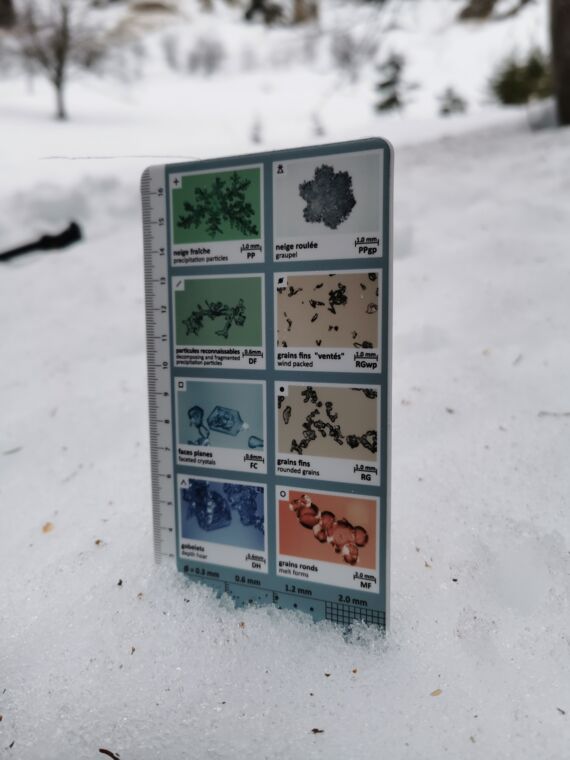
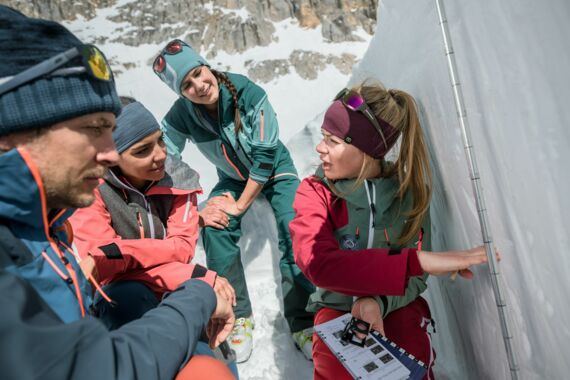
- The different layers within the snowpack
- The effects of wind and temperature changes
- Typical avalanche problems
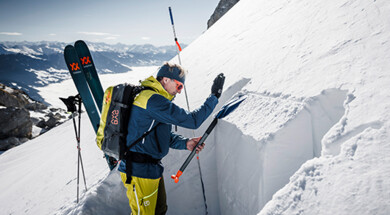
- Observing snow profiles and snow pits
- Comparing forecasts with the conditions observed during the day
Observe, Assess and Decide
Planning a ski tour is only the first step. The available information must be continually reassessed as you progress.
You will learn to follow a structured process:
- Observe the conditions and terrain.
- Assess the available information.
- Decide while considering the group and the possible consequences.
- Adapt the route as the situation develops.
- Turn back or find an alternative when a hazard is identified.
Three-Day Ski Touring Course Programme
The programme is provisional. The guide may adapt it according to the weather, snow cover, the group’s ability and the conditions encountered.
Day 1: Understanding the Tools and Observing the Terrain
The first day introduces the essential principles required to plan a ski tour.
Morning Theory Session
- Using digital maps and smartphone applications
- Reading and understanding the avalanche danger bulletin
- Analysing mountain weather forecasts
- Identifying slope angles
- Introduction to risk-reduction methods
- Planning a route and its alternative options
Afternoon Field Session
- Applying the concepts covered during the morning
- Observing the snow and terrain
- Identifying typical avalanche problems
- Comparing forecasts with the conditions encountered in the field
Day 2: Setting the Track and Making Decisions
The second day takes place on a longer ski touring route, creating more opportunities to observe the terrain and make decisions.
You will work on:
- Selecting the ascent track
- Estimating the level of avalanche danger
- Assessing local risk
- Anticipating possible consequences
- Adapting the pace to the group
- Identifying key decision points
- Applying measures to reduce exposure
Day 3: Putting Your Knowledge into Practice
The final day features a practical exercise on a more remote route in the Bornes or Aravis mountain range.
The objective is to apply the knowledge acquired during the first two days:
- Plan the route
- Identify key sections
- Compare the initial plan with the actual conditions
- Lead the group
- Select appropriate regrouping points
- Adapt or modify the chosen route
- Bypass a difficult section or decide to turn back
In the mountains, a good decision is not necessarily one that leads to the summit. It is one that remains consistent with the conditions, the terrain and the group.
Tools Covered During the Course
Depending on the programme and conditions, you may work with a range of observation, navigation and safety tools:
- Avalanche transceiver, shovel and probe
- Paper and digital maps
- Smartphone navigation applications
- Slope-angle measuring tools
- Avalanche danger bulletins
- Mountain weather forecasts
- Structured assessment and decision-making methods, including DCMR, the 3×3 method, the vigilance map and the Cristal method
- Snowpack observation tools
Equipment is only a means of supporting your decisions. The primary objective of the course is to learn how to interpret the available information and apply it to the actual context of each outing.
Why Take This Course with a Mountain Guide?
It is easy to consult a map, an application or an avalanche bulletin. The real challenge is to connect the different sources of information and compare them with the actual conditions observed in the mountains.
Training with a certified mountain guide allows you to:
- Ask questions directly
- Understand the reasoning behind the choice of a route
- Receive personalised feedback and corrections
- Observe real situations in the field
- Compare your assessment with that of a professional
- Improve your group-management skills
- Develop a structured method that you can use after the course
The objective is not to provide an automatic formula. It is to help you develop your ability to observe, assess and adapt.
Frequently Asked Questions
Do I Need Previous Ski Touring Experience?
Yes. This course is designed for intermediate-level ski tourers who already have experience of both uphill and downhill ski touring.
Do I Need to Know How to Use an Avalanche Transceiver Before the Course?
A basic understanding of how to use an avalanche transceiver, shovel and probe is recommended. If you are not yet familiar with this equipment, we recommend starting with our avalanche rescue equipment training course.
Will This Course Make Me Fully Independent?
The course will provide you with the methods, knowledge and practical guidelines needed to continue progressing. However, becoming fully independent in the winter mountains is a gradual process built through practice, observation and experience.
Is the Programme the Same for Every Course?
No. The course follows the same core learning objectives, but the routes and practical exercises may vary depending on the weather, snow conditions and the group’s ability.
Where Does the Course Take Place?
The course takes place in the Aravis or Bornes mountain ranges. The exact area is selected according to the conditions and the learning objectives.
Is Avalanche Safety Equipment Provided?
The loan of an avalanche transceiver, shovel and probe is included, subject to the arrangements for each course. If you own this equipment, we recommend bringing it so that you can learn how to use it more effectively.
What Happens If Conditions Are Unfavourable?
The guide may change the area, route or programme to suit the conditions encountered and the ability of the participants.
What Is the Group Size?
Each group consists of 4 to 6 participants per guide.