
Learn how to plan your trips and make better decisions in the mountains
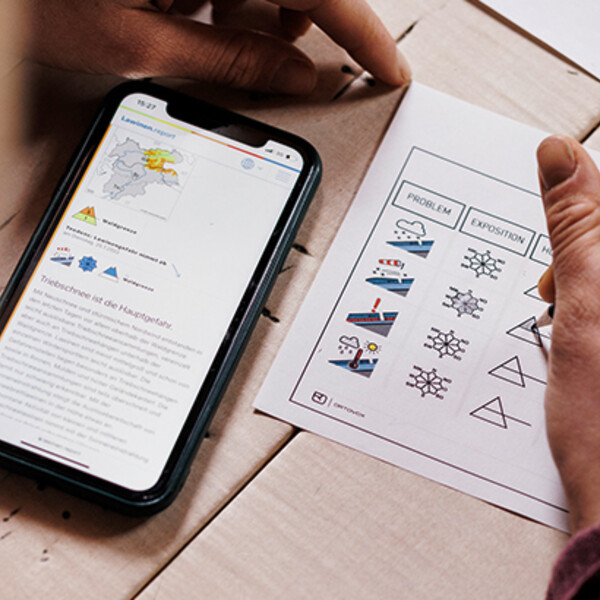
Understanding the avalanche forecast, planning a suitable route, observing the snowpack and adapting your track to the conditions: becoming self-reliant in ski touring requires much more than skiing technique alone.
During this two-day avalanche safety and snow science course, an IFMGA mountain guide will teach you a practical method for assessing avalanche risk before setting out and making informed decisions in the mountains.
The course combines theory, avalanche rescue exercises, route planning and ski touring. It is designed for participants who already have some ski touring experience and understand the basics of using an avalanche transceiver, and who would like to become more independent.
The aim is not to eliminate risk, but to identify it more effectively, assess it and adapt your decisions accordingly.
Course essentials
Duration: 2 days
Level: Intermediate – Level 2
Activity: Ski touring
Location: Thônes, Manigod and the Aravis mountain range, depending on conditions
Meeting point: Pré de Foire car park, Thônes
Start time: 8:30 am on the first day
Group size: 4 to 6 participants maximum
Supervision: IFMGA mountain guide
Safety equipment: Avalanche transceiver, shovel and probe available to borrow
Next course date: Click the “Book” button on the website
The exact location and schedule may change depending on the weather, snow conditions and the group’s ability.
Check whether you have the required level
Why take an avalanche safety and snow science course?
Carrying an avalanche transceiver, shovel and probe is essential when travelling in snow-covered mountains. However, avalanche rescue only begins once an accident has already occurred.
This course goes further. It teaches you how to act at three key stages.
Before the trip
- Interpret the avalanche forecast.
- Identify the avalanche problems that require particular attention.
- Plan a route suited to the conditions and the group.
- Identify exposed sections and prepare alternative options.
- Determine where it may be necessary to change the plan or turn around.
During the trip
- Observe the snow, terrain and signs of instability.
- Compare the actual conditions with the forecast.
- Choose an appropriate track.
- Identify key decision points.
- Adapt the route or turn back when conditions require it.
In the event of an avalanche
- Organise a search for a buried person.
- Use an avalanche transceiver, shovel and probe effectively.
- Allocate roles within the group.
- Improve your efficiency through practical rescue scenarios.
Course highlights
- Two days connecting theoretical preparation with observations in the field
- A full ski tour to put your knowledge into practice
- A small group limited to 4 to 6 participants
- Instruction from an IFMGA mountain guide
- Practical avalanche rescue training
- An introduction to snow science and snowpack observation
- Route-planning and decision-making exercises
- Avalanche safety equipment available to borrow
- The opportunity to test ORTOVOX equipment
Avalanche course programme
The programme is indicative. The guide may adapt it according to the snow conditions, weather and ability of the participants.
Day 1: Avalanche rescue and route planning
The first day begins with a welcome, a presentation of the course objectives and an assessment of the participants’ previous experience.
We then check how the safety equipment works and how it should be carried and used:
- Avalanche transceiver checks
- Group organisation
- Signal search
- Fine search
- Probing
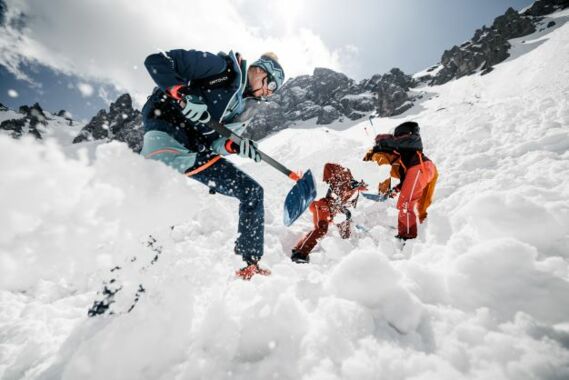
- Strategic shovelling
- Emergency procedures in the event of an avalanche
Exercises and realistic rescue scenarios will allow you to review the different stages of an avalanche rescue and improve your efficiency.
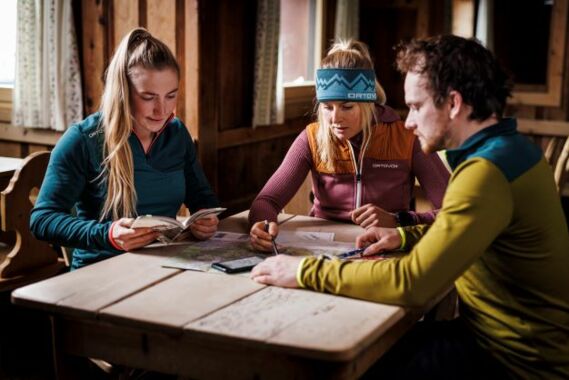
At the end of the day, we prepare the following day’s ski tour. Using the avalanche forecast, weather forecast, map and information about the group, we study the planned route, identify exposed sections and prepare alternative options.
Day 2: Snow science and decision-making in the mountains
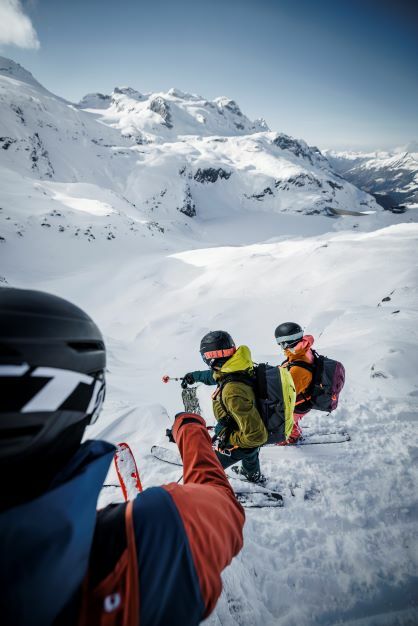
The second day takes the form of a group ski tour.
During the tour, you will learn how to:
- Navigate and follow the route prepared the previous day.
- Observe the terrain and snowpack.
- Recognise potentially exposed areas.
- Understand the role of persistent weak layers.
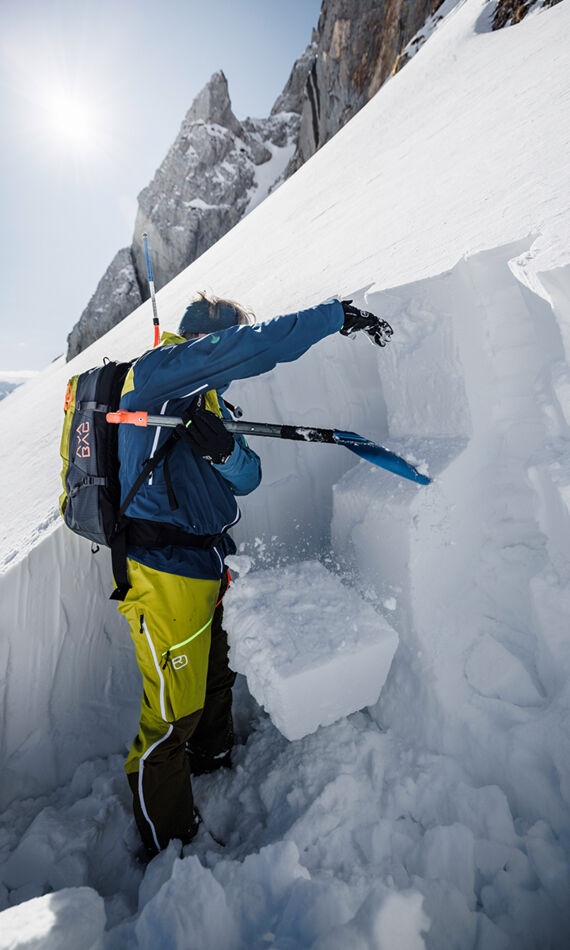
- Carry out and interpret a snowpack observation.
- Choose an appropriate track.
- Compare your observations with the information in the avalanche forecast.
- Apply a structured decision-making method.
- Adapt the route to the conditions encountered.
Each participant will be encouraged to observe the conditions, suggest possible decisions and explain their reasoning. The guide will then provide an analysis and practical advice to help you develop a method that you can use on future trips.
Who is this course for?
This course is suitable for ski tourers who:
- Already have some ski touring experience.
- Understand the basics of using an avalanche transceiver, shovel and probe.
- Would like to understand snow and avalanches more effectively.
- Want to learn how to plan their own routes.
- Wish to become more independent without skipping essential stages.
- Are comfortable travelling on an intermediate-level ski touring route.
Required technical level
You must have an intermediate level of ski touring experience and be physically able to complete a full day in the mountains with your equipment.
This is an intermediate Level 2 course. It is intended for participants who have already learned the basics of avalanche rescue.
Are you new to avalanche safety?
If you do not yet know how to perform an avalanche transceiver search, probe effectively or organise strategic shovelling, we recommend starting with our one-day course:
Avalanche transceiver, shovel and probe course: learn the essential avalanche rescue techniques
What is included in the price?
- Instruction and supervision by an IFMGA mountain guide
- Theoretical and practical training
- The use of avalanche safety equipment: transceiver, shovel and probe
If you have your own avalanche safety equipment, please bring it with you so that you can practise using the equipment you will carry on your own trips.
What is not included in the price?
- Transport to the meeting point
- Accommodation
- Food and drinks
- Personal insurance
- Ski touring equipment hire
- Any ski lift pass that may be required
- Personal expenses
- Anything not specifically mentioned under “What is included in the price”
Equipment required
Ski touring equipment
- Touring skis
- Suitable ski touring boots
- Climbing skins
- Ski poles
- Ski crampons compatible with your bindings, if requested by the guide
Personal equipment
- A backpack of approximately 30 litres
- Ski clothing suited to the conditions
- A waterproof and breathable jacket
- Warm clothing
- Gloves
- A hat or neck warmer
- Ski goggles and sunglasses
- A helmet
- A water bottle or flask
- A packed lunch and snacks
Avalanche safety equipment
- Avalanche transceiver
- Shovel
- Probe
Avalanche safety equipment can be provided. If you normally use your own transceiver, shovel and probe, we recommend bringing them with you.
Meeting point and organisation
The meeting point is at 8:30 am on the first day at the Pré de Foire car park in Thônes.
The exact course location will be chosen according to:
- Snow conditions
- Avalanche danger
- Weather conditions
- The group’s ability
- The course’s learning objectives
The ski day will usually finish between 3:00 pm and 4:00 pm. The guide may change the meeting place or time and will contact participants if any adjustments are required.
Guiding and group size
The course is led by an IFMGA mountain guide.
To encourage discussion, practical exercises and active participation, each group is limited to between 4 and 6 participants per guide.
This small group size allows us to work with real situations in the mountains while maintaining a personalised approach.
A course designed to help you become more independent
Two days are not enough to master the full complexity of snow and avalanches. However, this course gives you a structured approach, a shared vocabulary and practical tools to help you plan your ski tours more effectively.
By the end of the course, you will have acquired a framework that will help you:
- Find and assess relevant information.
- Plan a suitable route.
- Observe the terrain and snow conditions.
- Contribute to group decision-making.
- Recognise the limits of your own analysis.
- Accept the need to change your plans or turn around.
Frequently asked questions
Do I already need to know how to use an avalanche transceiver?
Yes. This course is intended for participants who already understand the basics of avalanche rescue and have an intermediate level of ski touring experience.
If you are new to avalanche safety, we recommend first taking our one-day avalanche transceiver, shovel and probe course.
What is the difference between an avalanche transceiver course and an avalanche safety and snow science course?
An avalanche transceiver course focuses mainly on rescue after an avalanche, including transceiver searching, probing and strategic shovelling.
The avalanche safety and snow science course also covers route planning, interpreting the avalanche forecast, observing the snowpack and making informed decisions in the mountains.
What skiing level is required?
An intermediate level of ski touring is required. You must already have some experience of the activity and be physically able to complete a full-day ski tour.
Is avalanche safety equipment provided?
An avalanche transceiver, shovel and probe can be provided.
If you have your own equipment, we recommend bringing it with you so that you can learn and practise in conditions that are as close as possible to your usual ski touring experience.
Is ski touring equipment provided?
No. Touring skis, ski touring boots, poles, climbing skins and other ski touring equipment are not included in the price.
Where does the course take place?
The meeting point is at the Pré de Foire car park in Thônes.
The exact operating area may change depending on the weather, snow conditions and avalanche danger in the Aravis mountain range.
How many participants are there?
Each group is limited to between 4 and 6 participants per mountain guide.
Will the course take place in bad weather?
The guide may adapt the location, schedule, programme or route according to the weather, snow conditions and ability of the group.
Learning to adapt to changing conditions is an important part of mountain safety.
Will I be fully independent after two days?
The course provides a practical method and concrete tools to help you become more independent.
However, it does not replace the experience gained through regular ski touring, repeated avalanche rescue practice and continuously updated knowledge.